
Student Leadership and Management Committee
The Student Leadership and Management Committee nurtures positive peer relationships, self-discipline and student leadership, creating a caring, safe and supportive environment where every student can thrive and make a positive difference to others.
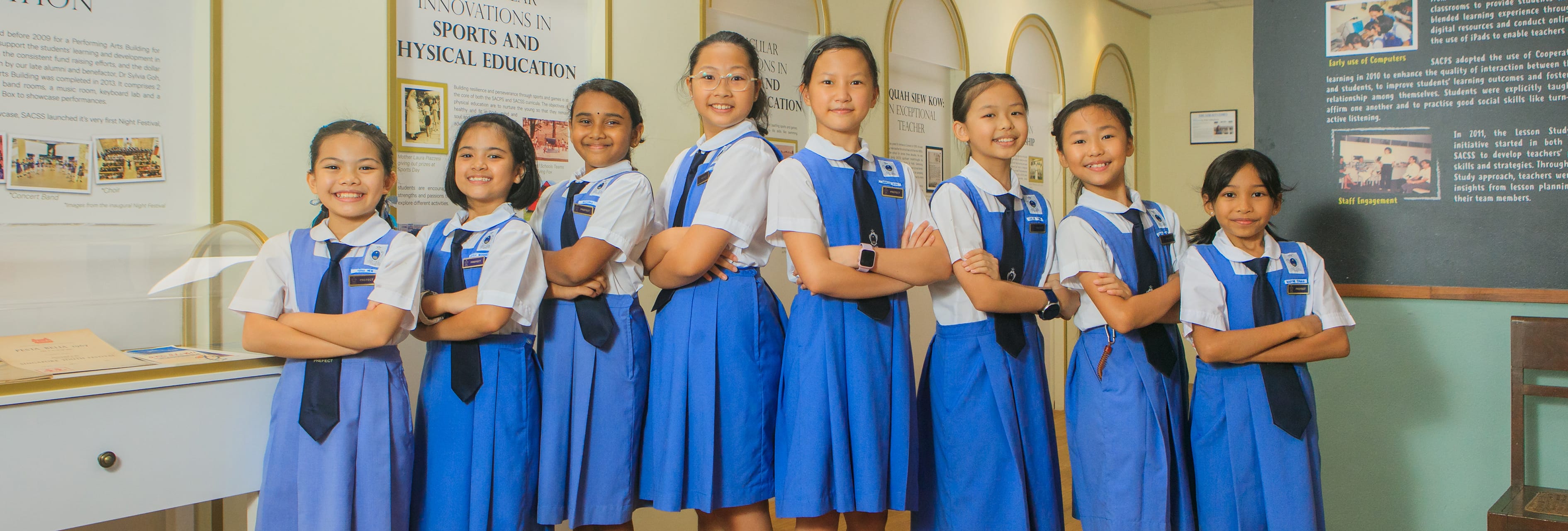
Student Leadership and Management Committee
Objectives
To foster a strong sense of belonging, nurture positive peer relationships, and strengthen a positive discipline climate, so that students can learn and thrive in a caring, safe, and enabling environment.
Positive Peer Relationships
Positive peer relationships are integral to fostering a caring and enabling school environment. They strengthen students’ sense of belonging, provide avenues for peer care and support, and build resilience by helping students feel connected, valued and supported within the school community. Peer relationships also serve as powerful channels of positive influence, creating opportunities for student voice, leadership and empowerment.
Our Peer Support framework focuses on three key domains: Peer Bonding, Peer Helping and Peer Influencing. These domains are enacted at two levels, with every student encouraged and equipped to be a peer supporter who contributes to a positive and inclusive school culture.
At Level 2, selected students from Primary 3 to Primary 6 are appointed as Peer Support Leaders (PSLs) based on their class sociograms. As student ambassadors for peer support, PSLs organise bonding activities that strengthen class cohesion and foster a sense of belonging among their peers. They actively look out for students who may be lonely, isolated or distressed, offer support where appropriate, and advocate for healthy and respectful relationships both online and offline. Through these efforts, PSLs play an important role in nurturing a positive discipline climate and a caring school community where every student can learn and thrive
Positive Discipline
The school adopts a positive and proactive approach to discipline, using Restorative Practices (RP) to nurture self-discipline, strengthen relationships and support students in making responsible choices. RP is enacted through three complementary aspects:
Promote and Prevent – Through restorative circles and intentional teacher-student interactions, the school builds trusting and respectful relationships that foster a safe, supportive and inclusive environment. These proactive practices help students develop a sense of responsibility and belonging, while reducing the likelihood of challenging behaviours that may disrupt learning.
Address and Correct – When inappropriate behaviours occur, teachers address them promptly and purposefully using restorative questions. Students are guided to reflect on what happened, understand how their actions have affected others, take responsibility for their choices and consider appropriate ways to make amends.
Replace and Restore – Beyond correcting behaviour, the ultimate goal is to develop students’ self-discipline and character. Teachers support students in replacing inappropriate behaviours with positive, prosocial behaviours and in restoring relationships that may have been affected by their actions. Through this process, students learn to repair harm, rebuild trust and make more responsible choices in future.
Student Leadership
In pursuit of our school vision, “Every SACPS girl a confident and curious learner who serves with commitment, compassion and cheerfulness,” the departmentl provides opportunities for every student to develop her leadership capacity and contribute meaningfully to the school community.
Student leadership development aims to nurture leaders who demonstrate the Canossian Attributes of Confidence, Curiosity, Commitment, Compassion and Cheerfulness in the way they lead and serve others. Leadership is viewed not merely as holding a formal position, but as the ability to take ownership, contribute positively and make a difference to others.
Student leadership development in SACPS focuses on three dimensions:
Personal Leadership – Students learn to take ownership of their actions and choices, develop self-awareness and demonstrate responsibility for their own growth and behaviour.
Peer Leadership – Students learn to serve, support and positively influence those around them, fostering a sense of belonging and contributing to a caring and inclusive school community.
Thought Leadership – Students learn to contribute ideas, influence others positively and create value for the wider school community by identifying needs, initiating solutions and taking purposeful action.
At SACPS, we believe that every student is a Service Leader. Service Leadership is grounded in our Canossian core values of Charity, Humility, Forgiveness and Faith, which guide our students in leading with a spirit of service, compassion and care for others. Through everyday acts of service and opportunities to lead, every SACPS girl is empowered to use her strengths to make a positive difference to those around her.